
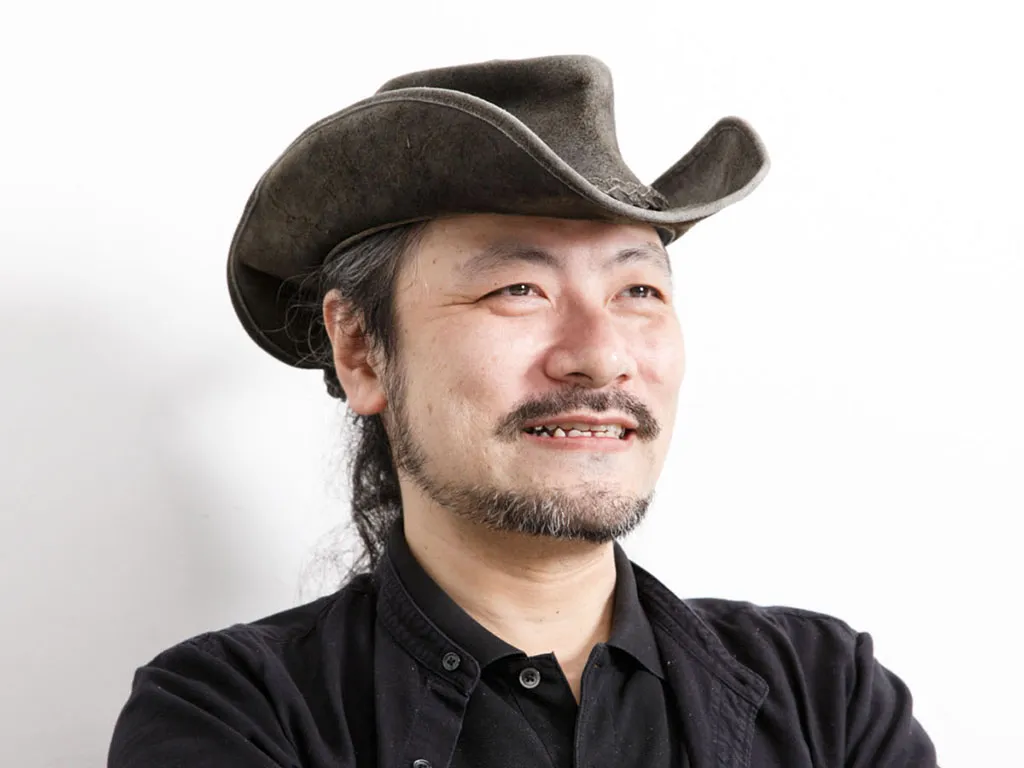
Stories
IGA on the passion for making games
Koji Igarashi (IGA) and Shutaro Iida, veterans of the Castlevania series, and Bloodstained programmer Shingo Tate talk about ArtPlay’s unusual way of working, where each person covers a wide range, their feelings about action games, and what comes next.
· Silicon Studio Agent (reprinted with permission)
-
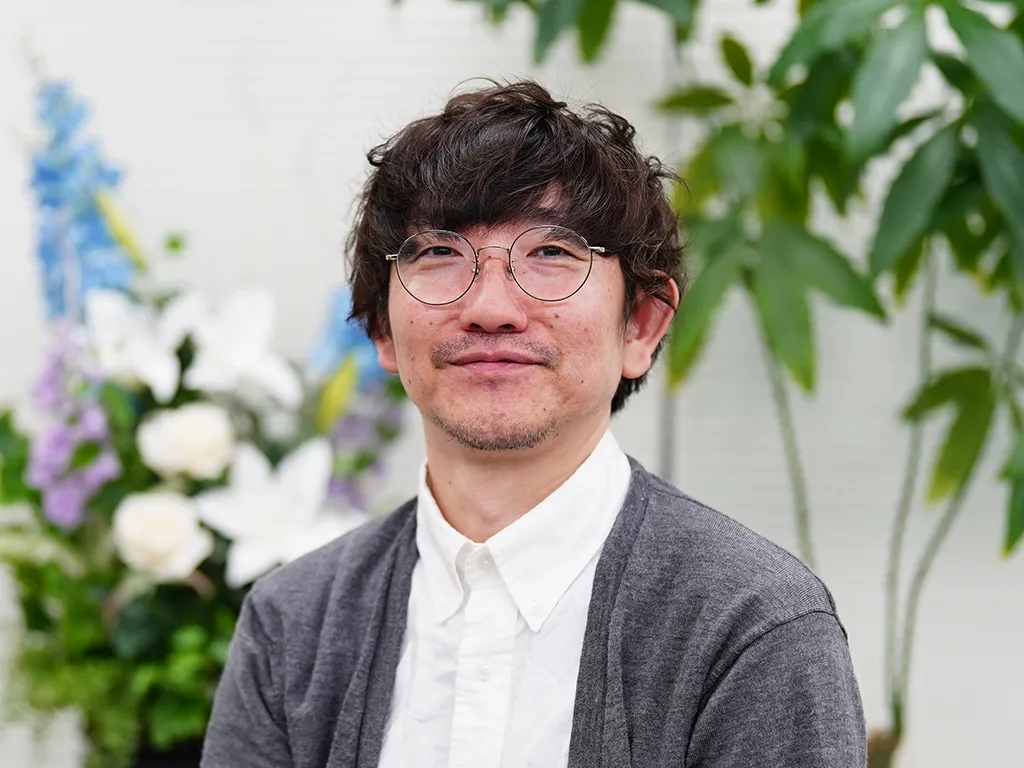
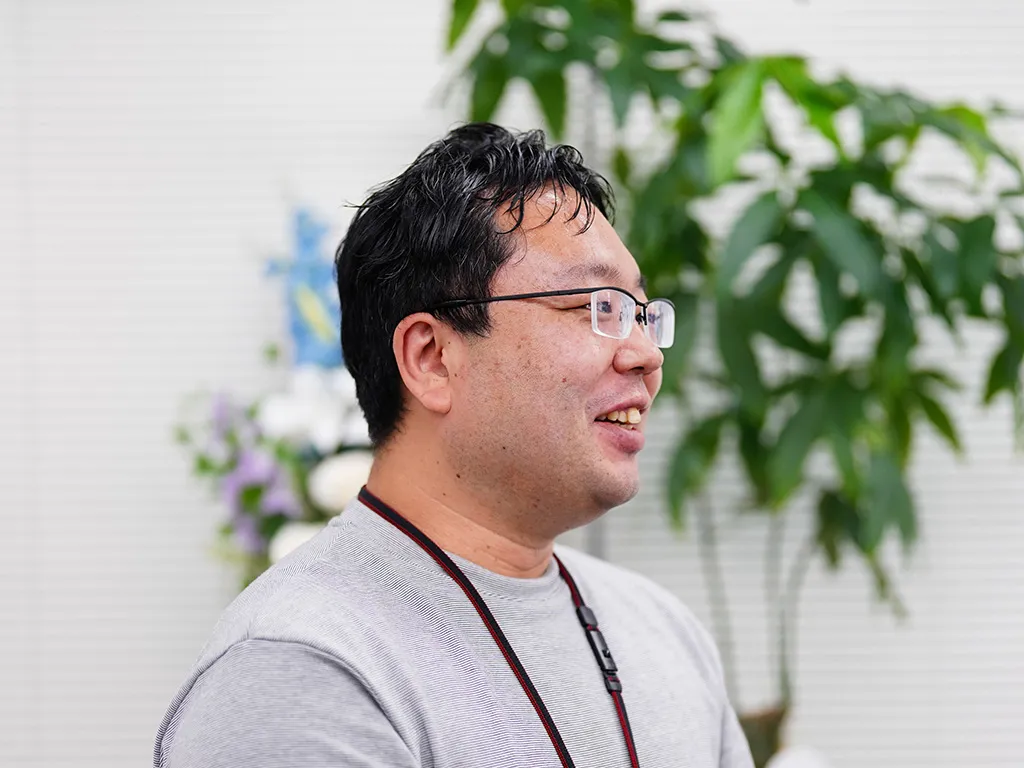
 Koji IgarashiPresident / Producer
 -
 Shutaro IidaDirector
 -
 Shingo TateProgrammer / Director
ArtPlay drew the world’s attention when Bloodstained: Ritual of the Night raised $5.5 million on Kickstarter and went on to sell more than a million copies, establishing the studio as a leader in 2D action. We spoke with Koji Igarashi (IGA) and Shutaro Iida, who built the beloved Castlevania series, and with Shingo Tate, a programmer on Bloodstained, about the studio’s unusual structure, where each person covers a wide range, their passion for action games, and what comes next.
A company that delivers high-quality games to people all over the world
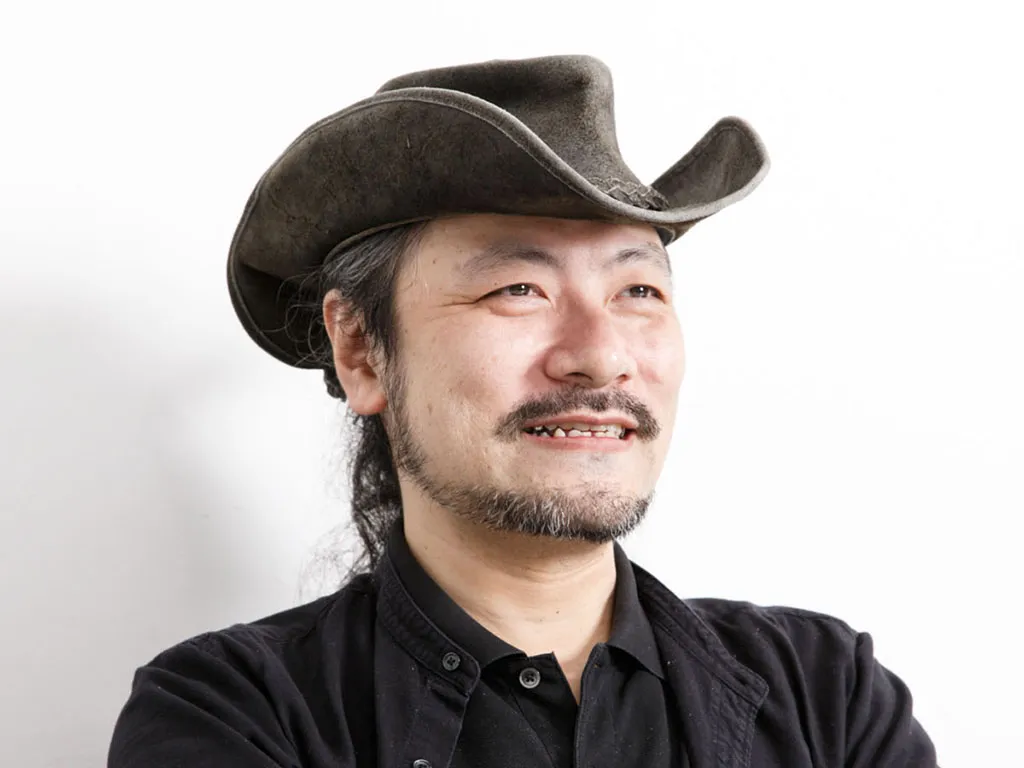
To start, how did ArtPlay come about?
Igarashi: When we founded the company, making console games in Japan was hard. The three of us who started it agreed that social apps would be the foundation of the business, but we kept saying, no matter what, we would make console games too.
Our message, “continuously creating high-quality games that exceed the expectations of fans around the world,” means two things: we want to be a company that can do many things across console, mobile and beyond, and we want the games we make to reach people everywhere.
Making the Bloodstained fans asked for
Bloodstained became a legendary Kickstarter project. What kind of game were you aiming for?
Igarashi: The big question, from the fans’ point of view, was whether a project started by Igarashi after leaving a big company could match or exceed the quality of his earlier work. And Kickstarter is a system where you show everything from the start.
If you try something new in the game systems and realize halfway through that it isn’t working, it’s hard to stop or change course. So the first thing we decided was not to change the game’s core axis.
Iida: It was my first time working with an external development partner, and we had to start by teaching members who had no experience with this kind of game. So we didn’t take big risks with the core systems. We added new elements around the edges, but we judged it dangerous to experiment at the core with a team that had little experience.
Bloodstained has the shard system, where you absorb crystals left by defeated enemies. We had used a similar system before. We took a mechanic that had been well received, powered it up, and asked the fans on Kickstarter, and they said, “Yes, that’s the one!”
What was hardest about production?
Igarashi: The biggest thing was making the game together with external staff, not just our own. Many things we assumed were easy turned out to be technically difficult.
Iida: I was the one in the middle, so coordination was very hard. We confirmed feasibility before moving ahead, but when something later turned out to be impossible, it was a daily puzzle: “This idea is gone, what now? How do we rebalance?”
How did you two come to join ArtPlay?
Iida: I spent nearly twenty years at my previous company, working on programming, direction and game design. I had been in charge of Igarashi’s 2D exploration games, and when Bloodstained started he asked me to do the game design again. Console development was getting difficult at the time, and I wanted to make console games again, so I moved.
Then I listened to Igarashi’s ideas for the Bloodstained setting and we talked about what systems and characters it should have. The shard system at the core is actually something I had turned down when it was proposed for a different title years earlier. With time, ideas appeared that made it work. The timing was right.
Tate: I joined a large company straight out of school and met them when I was assigned to producer Igarashi and director Iida’s team. After that I worked on browser games, mobile titles and 3D titles at another company. One day Igarashi called: “Want to come join us? Could you help out a bit?” It sounded interesting, so I did. On Bloodstained my role was to support the external partner studio after hearing what the two of them wanted.
Were you nervous about moving from a large company to a young one?
Iida: Loving games was the deciding factor. On the 2D Castlevania series I had been free to build the play however I liked, and I thought I could experience that again.
Tate: I had moved to another large company, but I thought it would be interesting to experience a small one while I was still at this age. And of course the two people who let me have fun making games as a rookie were a big reason. At a small company one person often wears many hats, and I enjoy that too.
Work that crosses job boundaries makes games more interesting
What do you find most enjoyable about making games?
Iida: I’m a designer, so I love the moment an idea takes shape in the game. And when players say “this part was great,” it gives me the energy to do better next time.
Tate: I’ve always been a programmer, so it’s when a game runs on my code and is fun to play. Iida would give me the outline, “this enemy is like this, you handle the rest,” and leave the details to me. Hearing “nice!” about what I made is a great feeling.
Iida: In our games we roughly decide what an enemy does, “jumps and attacks,” “fires projectiles,” but often leave the actual movement to whoever builds it. People get more into it that way. Bosses are specified in more detail, but for regular enemies we describe a rough behavior and say “do what you like with the rest.” It’s more fun to make, too.
What did you focus on in Bloodstained?
Iida: The most important thing is how the player moves through the whole map: placing “what happens where” and “you get this item here” with good rhythm, so the player collects what they need with the right pacing. I care a lot about the balance across the whole game, the hard stretch followed by an item that makes things a bit easier. I play the game over and over in my head before it even runs.
Tate: I had a lot of freedom on the stage deliberately styled like old 8-bit graphics. The main elements were specified, but I could arrange them as I liked. I also built tooling to cut the time spent waiting for processing, so development ran smoothly.
Aware of overseas fans, but really aiming at Japanese players
The game is very popular overseas. Do you develop with overseas fans in mind?
Iida: Overseas opinions reach us whether we like it or not. But at the root, we make games for Japanese players, because if we don’t make what we ourselves enjoy, we lose our footing. Years ago someone asked us to raise the difficulty because “hard games sell overseas.” We did, and then we lost track of what made it fun. So first, we as Japanese players have to find it fun. Of course we listen carefully to overseas feedback and reflect what we can.
What feedback shaped Bloodstained?
Iida: Bloodstained was built where players’ voices reached us directly, so we agonized over routes and difficulty. When we released a demo of the opening, many said it was “easy.” I thought it was hard and wanted to lower the difficulty, but we kept the opening as it was to respect the feedback. In hindsight, the early game being hard and later parts easier wasn’t ideal.
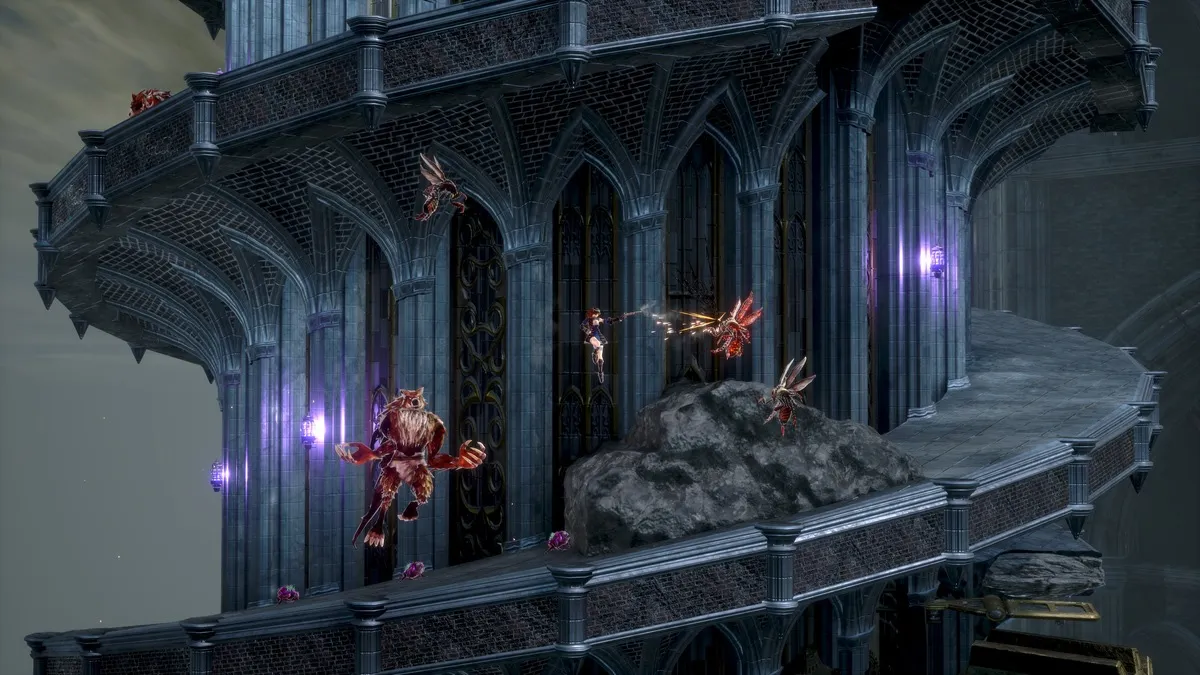
The graphics had the biggest impact; the art team was a battlefield. Things we had always made in 2D were now 3D, where lighting decides everything, and I helped out there too.
Igarashi: We wanted toon rendering from the start, but photorealistic requests came in along the way and it was tough. The screenshots we posted on Kickstarter were harshly criticized. The characters especially caused arguments, but we committed to toon rendering and the quality jumped.
Being able to almost fully automate the repeating patterns needed for higher CG quality in Houdini was a big help, as was a feature that generated background images from painted terrain.
Small teams where everyone wears many hats
What does the development structure look like now?
Igarashi: One team makes a game together with an external company, and another team, mostly programmers, is in pre-production. The first has three people doing hands-on work like design, plus someone who keeps communication with the overseas partner smooth. The second has one director, one game designer and four programmers.
What makes ArtPlay different from other studios?
Igarashi: We’re small, but even when we work with external companies we don’t hand everything over; the core of design, art and technology stays with our own people. I’ve worked in large structures, and there it’s hard to hear the people at the edges. The pre-production team is about the size of a PC Engine team from the old days, and anyone can voice an opinion regardless of title.
Iida: For action instructions, for example, we prepare detailed documents for external companies but not for our own staff. Partly because they don’t need it, and partly because it lets the maker put their own sense of play into the work.
Igarashi: ArtPlay is full of people who work across layers, who can do other things beyond their own area. It isn’t a requirement for this hiring round, but the chance to experience many things beyond your specialty is what sets us apart.
Iida: I was a programmer once, and even then I did game design, wrote flavor text for characters and items, and on this game I even fixed motion.
Igarashi: The technology we carry has become lost technology. You could reproduce how things used to move with today’s tools, but the foundation is different. Character action used to be entrusted to programmers; now it’s handled with motion data. Motion can express many things, but game characters don’t only move under specific conditions, so they need to respond flexibly, and driving them with code makes action limitless.
Fewer companies make 2D games now, so being able to learn that lost technology may be one of our strengths. We can explain exactly how everything moves. If you’re interested, we’ll find work that matches, in programming or elsewhere, so speak up.
We want creators, not just players
What kind of person are you looking for?
Igarashi: First, someone who wants to make games, not just play them. Stand on the creating side, not the consuming side.
Iida: Someone who can have a dialogue, not just a conversation. It’s not about right or wrong; it’s about being able to discuss how to make the game better, and always being able to explain how an idea benefits the player.
Tate: Building exactly what you’re told, perfectly, is professional too, but I want people to cross job boundaries and keep proposing ways to improve the game. Even if you join as a programmer, I welcome someone who speaks up as if they were going to take my job as director.
What experience helps people succeed here?
Igarashi: Even with a busy day job, today’s tools make it possible to build a console-quality game alone. But if you say you made an action game in Unreal Engine and all you did was follow the samples, that’s a problem. Have something you can point to: “I built this part this way.”
Iida: Unreal Engine is a bit like a game construction kit; it can do almost anything, but don’t stop there. Use the tool rather than being used by it, and have clear points you can show off. Someone who has built a whole game from start to finish, even as a hobby project, has real ability. Few people know the entire process, and being able to see a game from a step back matters a great deal.
Action games that surprise players around the world
What does ArtPlay want to make next?
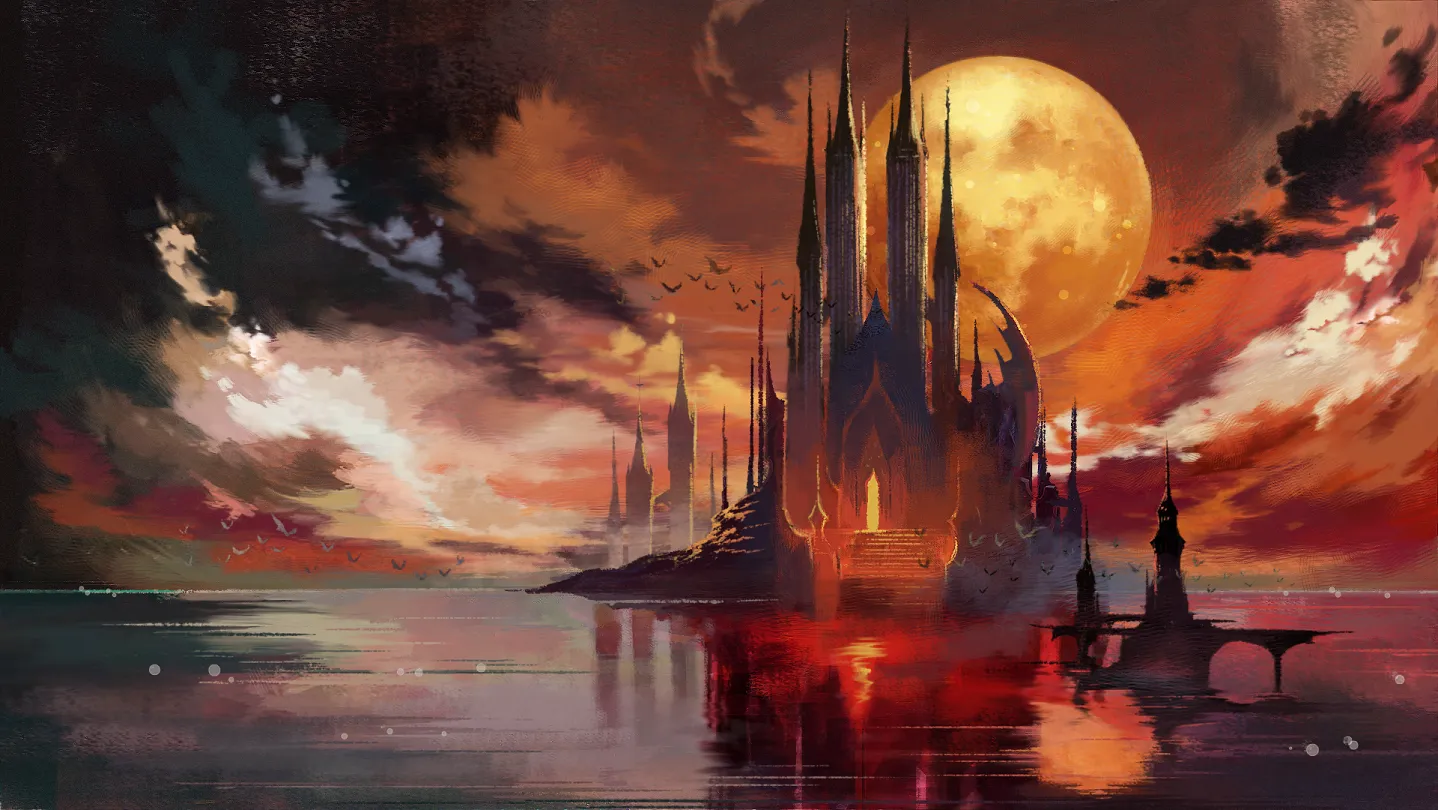
Igarashi: Bloodstained is a title we want to grow into a series, so it will remain our core.
Iida: For me a game is interactivity, and action games express that most clearly. Whatever we make will have action elements; action is the keyword.
Igarashi: We want to take on the world with the weapons we have.
Iida: It needs technical groundwork, but I want to make an open-world game, and an online multiplayer game. There is a lot we left undone in past titles, and I want the chance to build those properly.
Finally, a message for people thinking of applying.
Igarashi: At ArtPlay, speaking up changes the game. We are small, but we make games with passion, and we want people with a strong will to make console games to join us.
Iida: Many people on my team say it was hard while we were making it, but once it was done they were glad they were part of it. We’ll keep making fun games with conviction; if you want that experience, join us.
Tate: Here you sit near people of every discipline, so you can learn how games are made by watching each of them, and widen your own range. It’s a place for experiences you can’t have at a big company, and for people who want to take on new challenges. We’re waiting for people who want to challenge themselves more than ever.
This interview took place in November 2023. Shutaro Iida (SHUTARO) passed away in February 2026. His words are published here as he spoke them.
Open positions
EngineeringAP-ENG-01
Lead Game Programmer
Build the core of the game in C++ and Unreal Engine while leading the programming team’s progress and implementation.
EngineeringAP-ENG-02
Game Programmer
Bring players, enemies, gimmicks and game-flow systems to life in Unreal Engine and C++.
EngineeringAP-ENG-03
Graphics Programmer
Own graphics programming in Unreal Engine, from shaders to engine modifications.